Horse and pony breeds
Profiles of the native breeds of Britain and Ireland, and of the Thoroughbred, Arab and warmbloods: where each comes from, its history, its breed standard and what it is used for today.
England 8
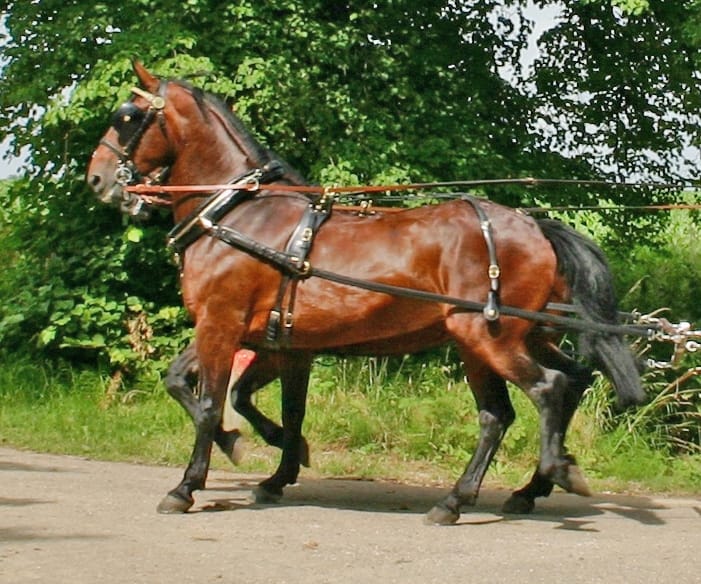
Cleveland Bay
England's oldest horse breed: always bay with black points, a strong, clean-legged carriage and riding horse from North Yorkshire.Height 16–16.2 hhRare breed: Priority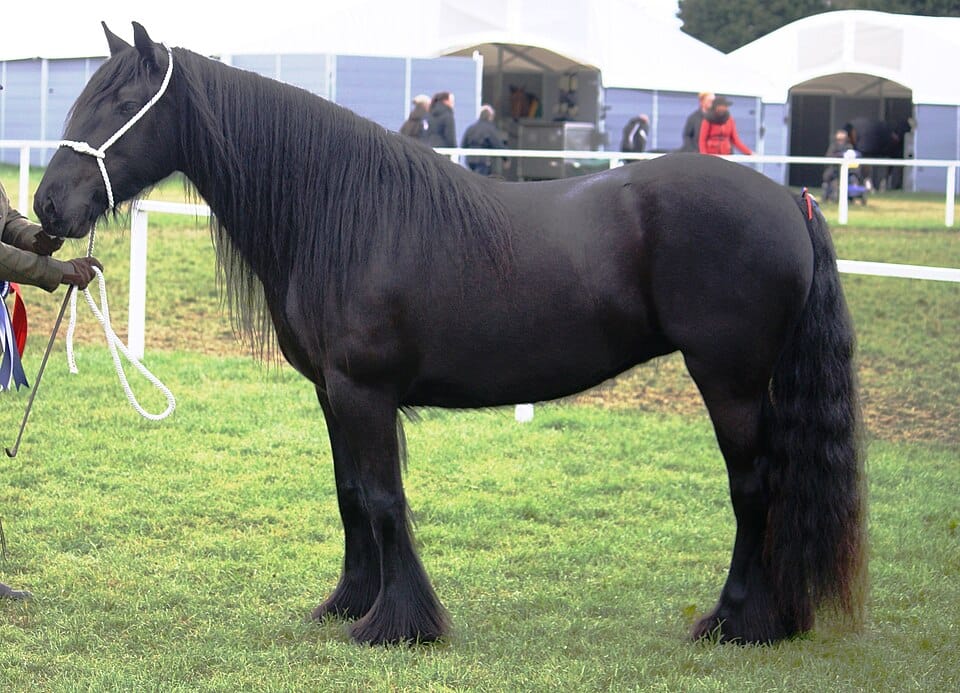
Dales pony
The powerful pony of the eastern Pennine dales, once the lead miners' pack pony: strong, energetic and kind, and mostly black.Height Preferred 142.2–146.2 cm (14–14.2 hh)Rare breed: Priority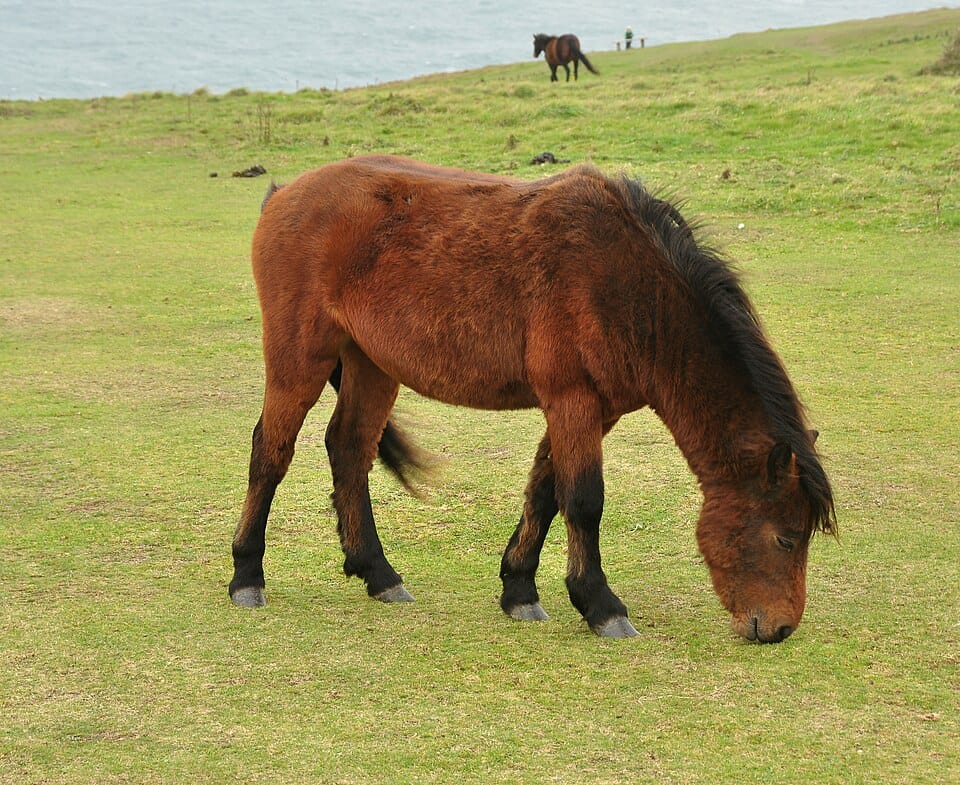
Dartmoor pony
Devon's native moorland pony: a small, quality riding pony, built like a scaled-down middleweight hunter, and a long-standing choice for children.Height Not exceeding 127 cm (12.2 hh)Rare breed: At Risk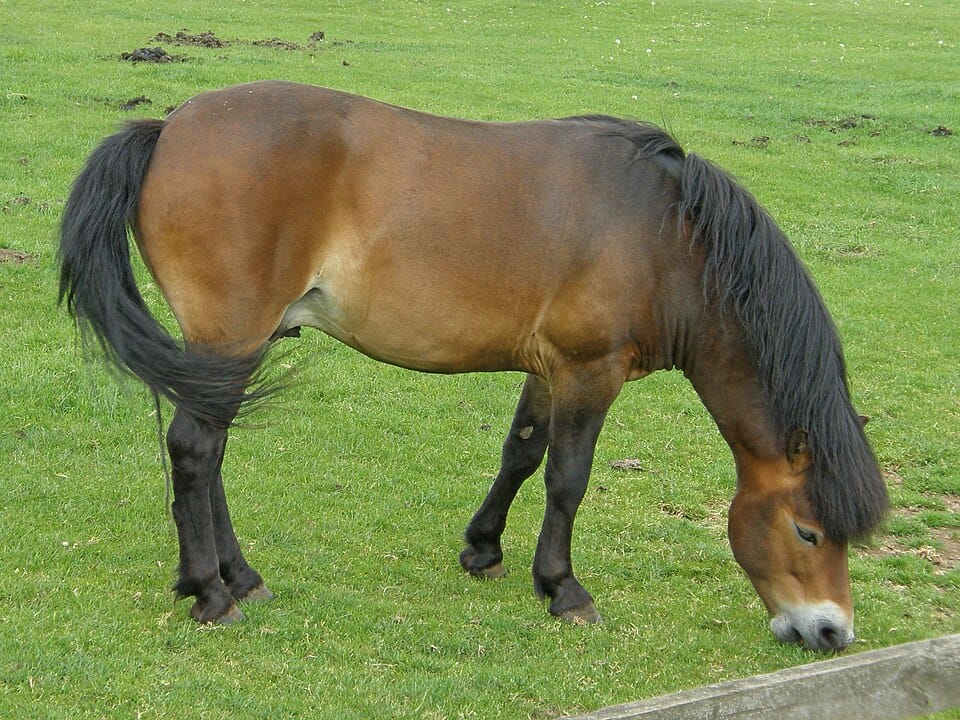
Exmoor pony
Probably Britain's oldest native pony: small, hard and strong, with a mealy muzzle, hooded 'toad' eyes and a double-layered winter coat.Height Stallions and geldings 119.4–129.5 cm (11.3–12.3 hh); mares 116.8–127 cm (11.2–12.2 hh)Rare breed: Priority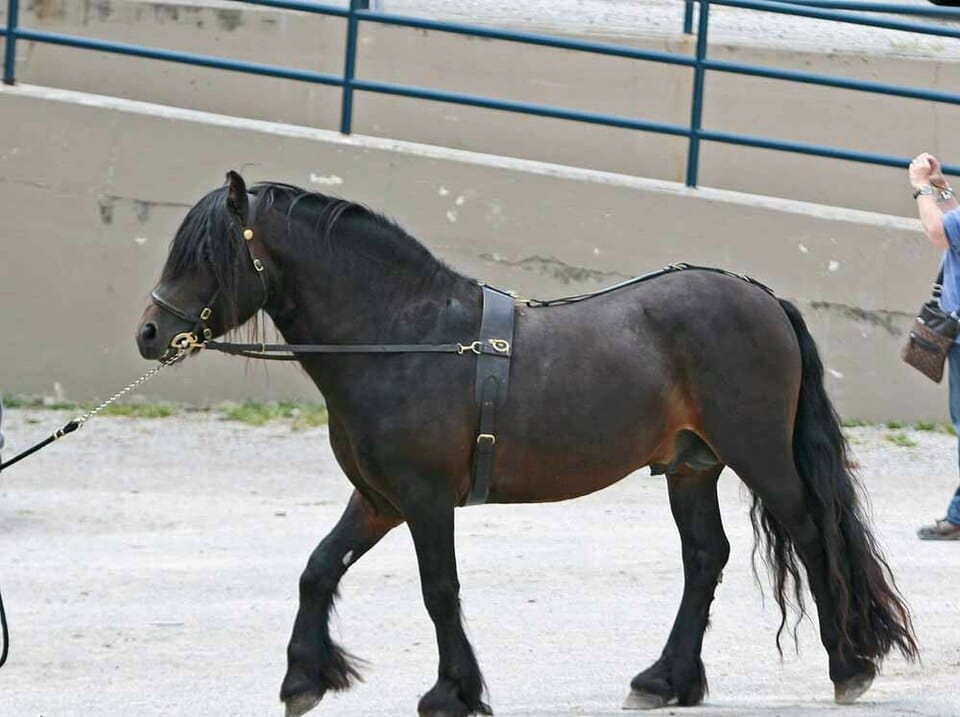
Fell pony
The hardy, mostly black pony of the northern fells: once a pack pony for wool and lead, now a ride-and-drive family pony for adults and children.Height Not exceeding 142.2 cm (14 hh)Rare breed: At Risk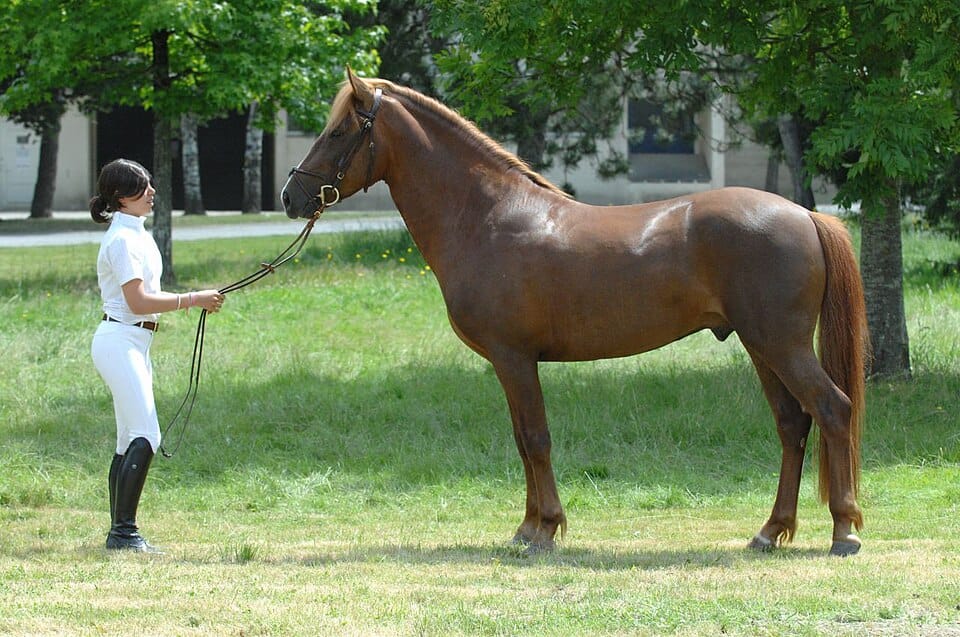
New Forest pony
Hampshire's native pony, still grazing the open Forest today: a working pony with substance, able to carry adults yet narrow enough for small children.Height Up to 148 cm (about 14.2 hh); no lower limitRare breed: At Risk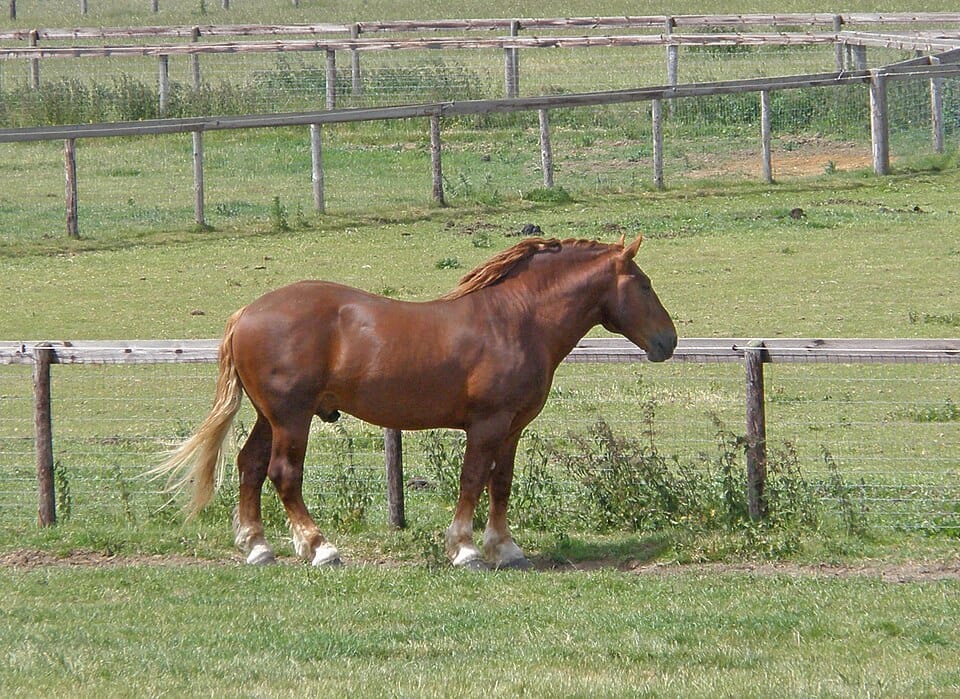
Suffolk (Suffolk Punch)
The oldest British heavy horse breed in its present form: always chesnut, short-legged and immensely strong, bred for the heavy clay of East Anglia.Height 15¾–17 hh at maturity; some exceed 17 hhRare breed: Priority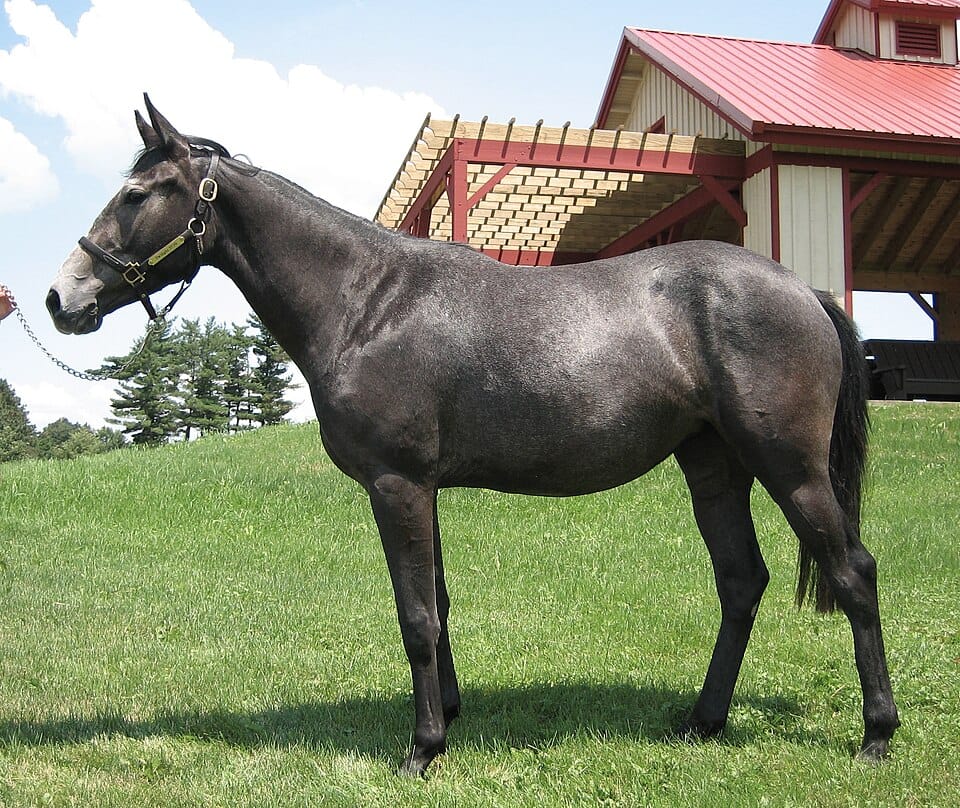
Thoroughbred
The racehorse bred in England from Middle Eastern stallions and British mares, recorded in the General Stud Book since 1791, and a talented all-rounder after racing.Height No height standard: the breed is defined by pedigree, not sizeWales 4
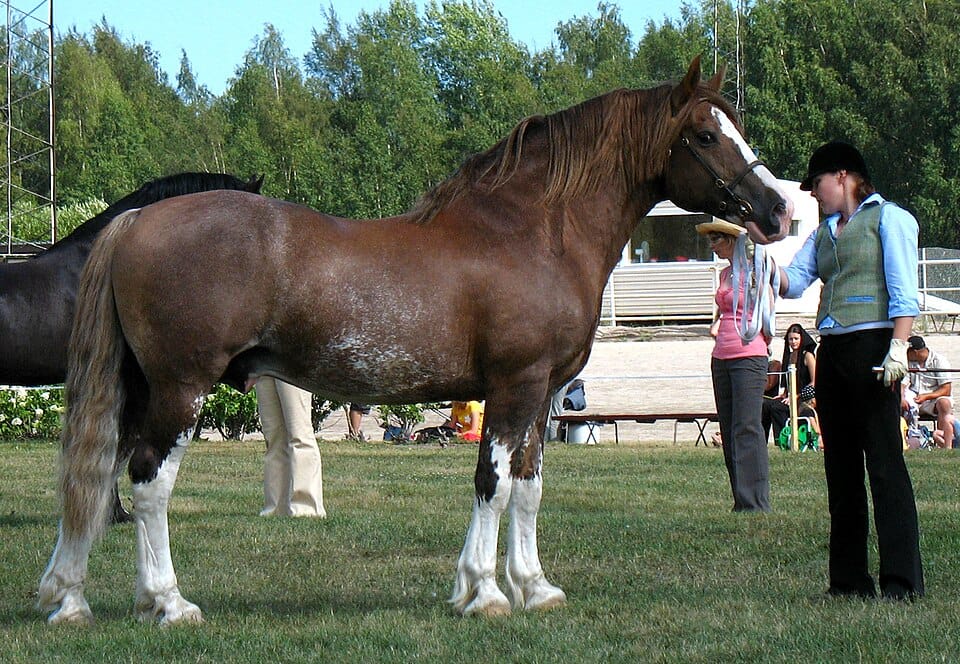
Welsh Cob (Section D)
Wales's historic ride-and-drive cob, recognised as a breed by the 15th century: strong, courageous and versatile, with no upper height limit.Height Over 137.2 cm (13.2 hh); no upper limit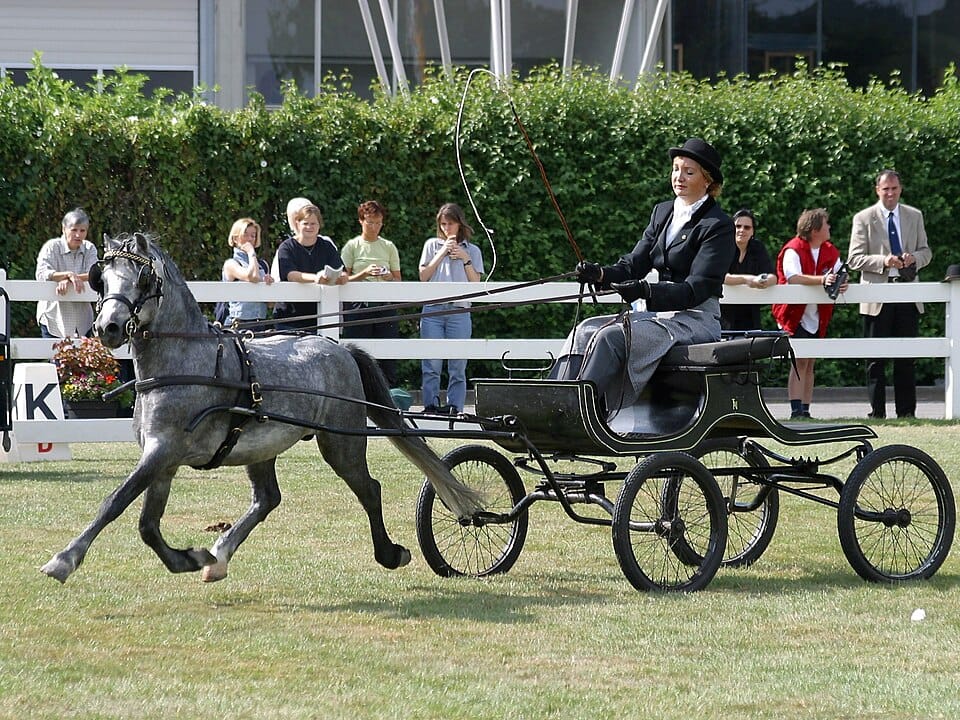
Welsh Mountain Pony (Section A)
The smallest of the Welsh sections and the foundation of all of them: a hardy, spirited pony, popular for the youngest riders.Height Not exceeding 121.9 cm (12 hh)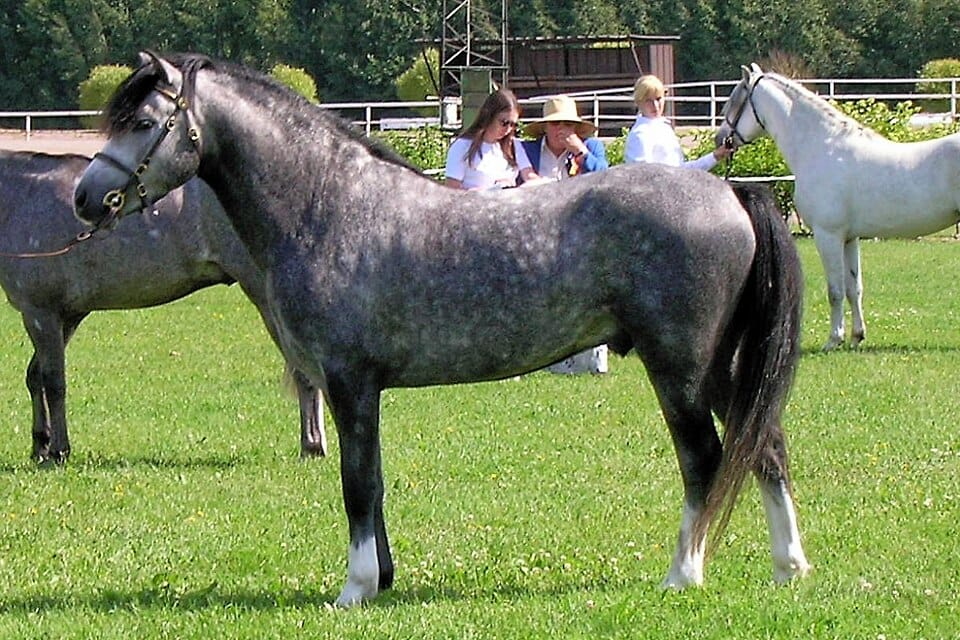
Welsh Pony (Section B)
The Welsh riding pony: the Section A's quality and hardiness in a taller frame, and an all-round family pony.Height Not exceeding 137.2 cm (13.2 hh)Rare breed: At Risk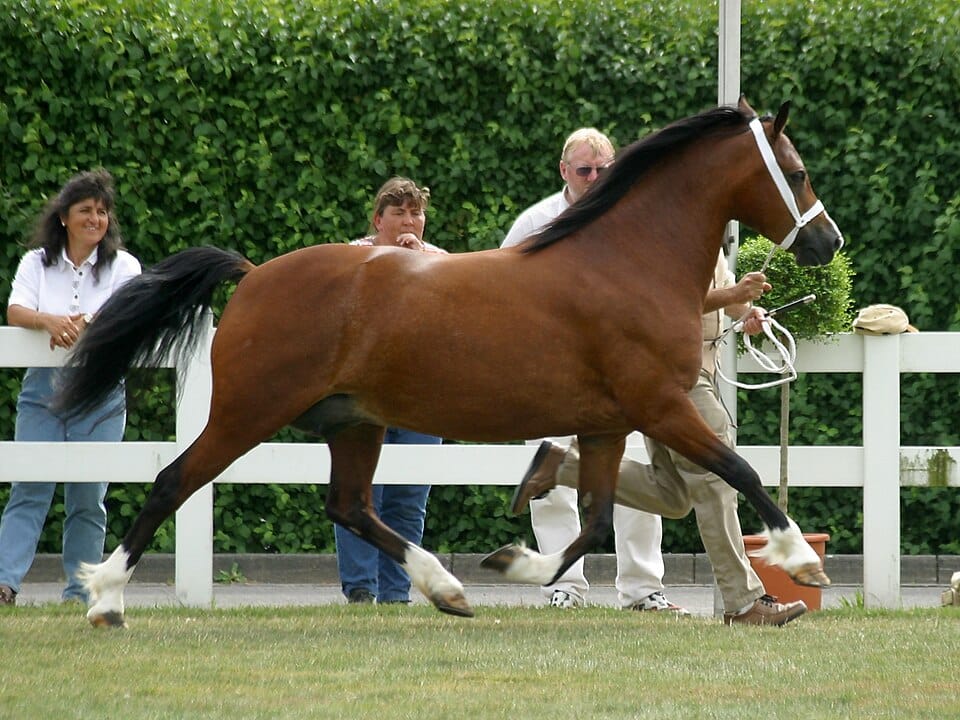
Welsh Pony of Cob Type (Section C)
A Welsh Cob in a smaller package: strong, hardy and active, a natural jumper and a capable driving pony for the whole family.Height Not exceeding 137.2 cm (13.2 hh)Scotland 4
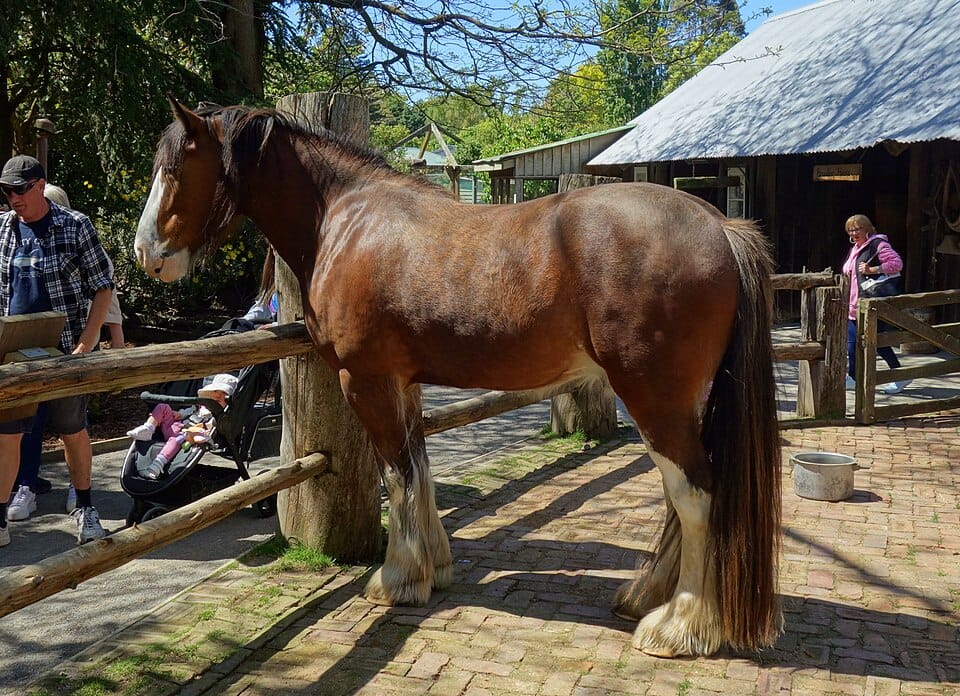
Clydesdale
Scotland's heavy horse, from the old district of Clydesdale in Lanarkshire: tall, powerful and gentle, with a white blaze and silky white feather.Height Normally 16–18 hh; mares usually at the lower endRare breed: At Risk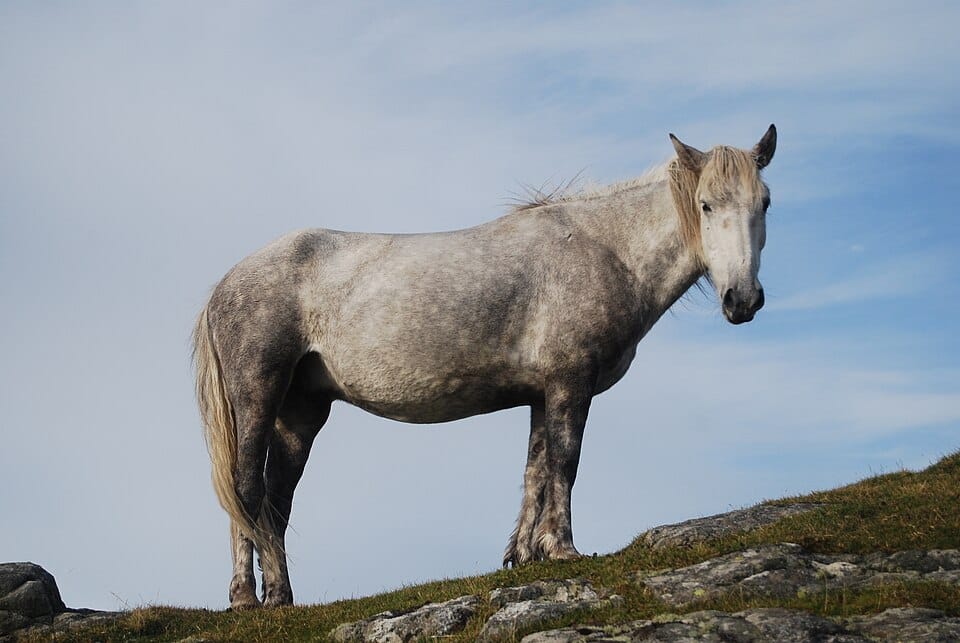
Eriskay pony
One of the last survivors of the native ponies of the Western Isles: a rare, mostly grey pony, strong enough to carry a light adult.Height 124–138 cm (12.0–13.2 hh)Rare breed: Priority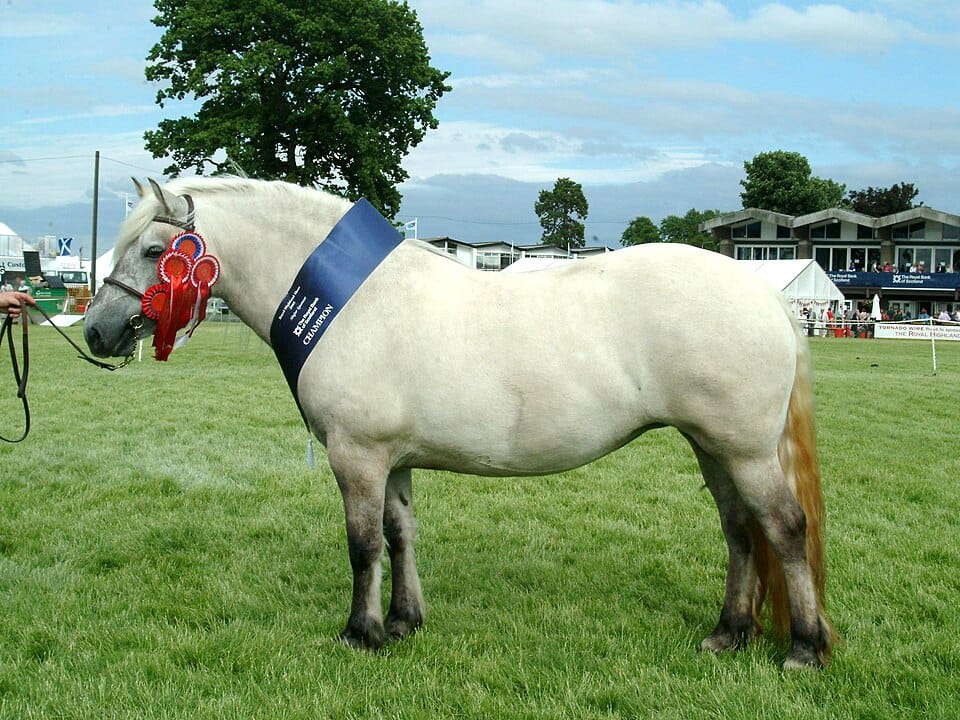
Highland pony
Scotland's strong, sure-footed native pony, known for its range of dun colours with a dorsal eel stripe, and a ride, drive and pack animal.Height Not exceeding 148 cm (14.2 hh)Rare breed: At Risk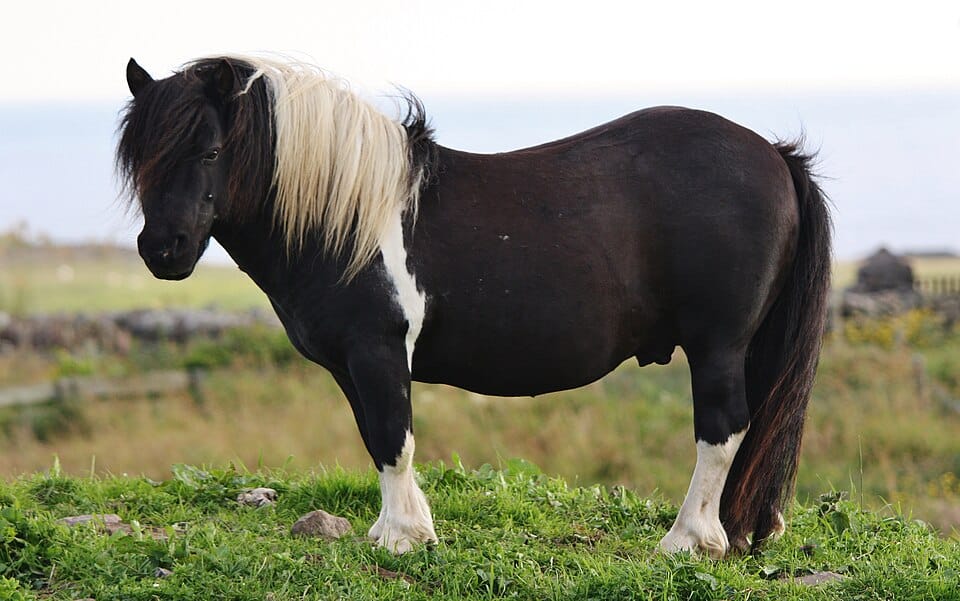
Shetland pony
The small, immensely strong pony of the Shetland Isles, with a double winter coat and a long, thick mane and tail; registered stock is no taller than 107 cm.Height Not exceeding 107 cm (42 inches)Ireland 3
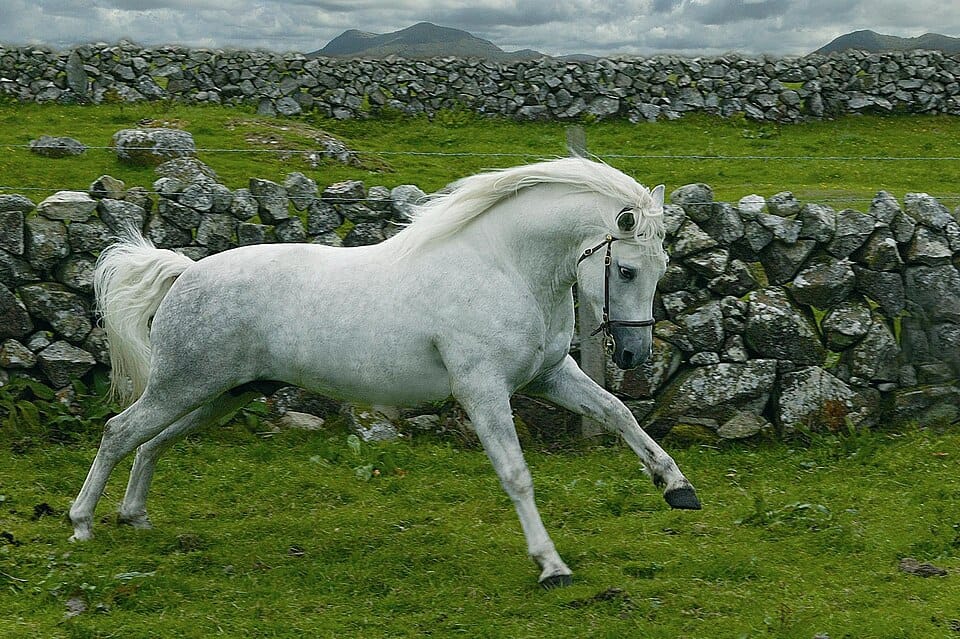
Connemara pony
Ireland's native pony, from the rugged west coast of County Galway, and a versatile riding and jumping pony for children and adults alike.Height 128–148 cm (about 12.2–14.2 hh) at maturity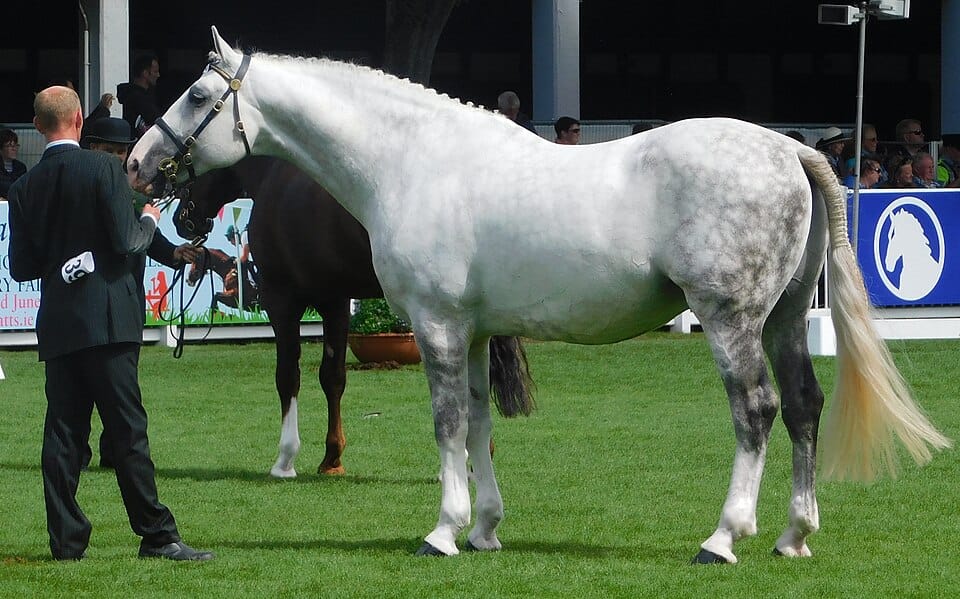
Irish Draught
Ireland's national breed: once the all-purpose horse of the small Irish farm, now prized for breeding hunters, show jumpers and event horses.Height Mares about 15.2–16.2 hh; stallions about 16–17 hh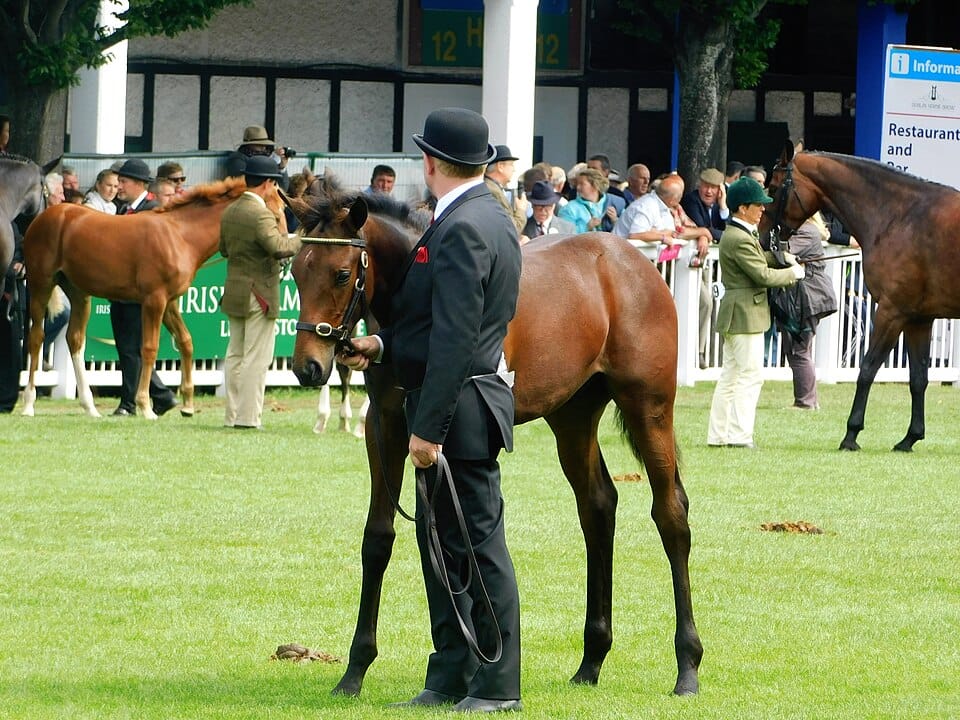
Irish Sport Horse
Ireland's sport horse, first bred by crossing the Irish Draught with the Thoroughbred and now a leading eventing and show jumping breed; the Traditional Irish Horse keeps the original bloodlines.Height No height range in the breed standard, which describes a functionally correct, balanced horseEurope 3
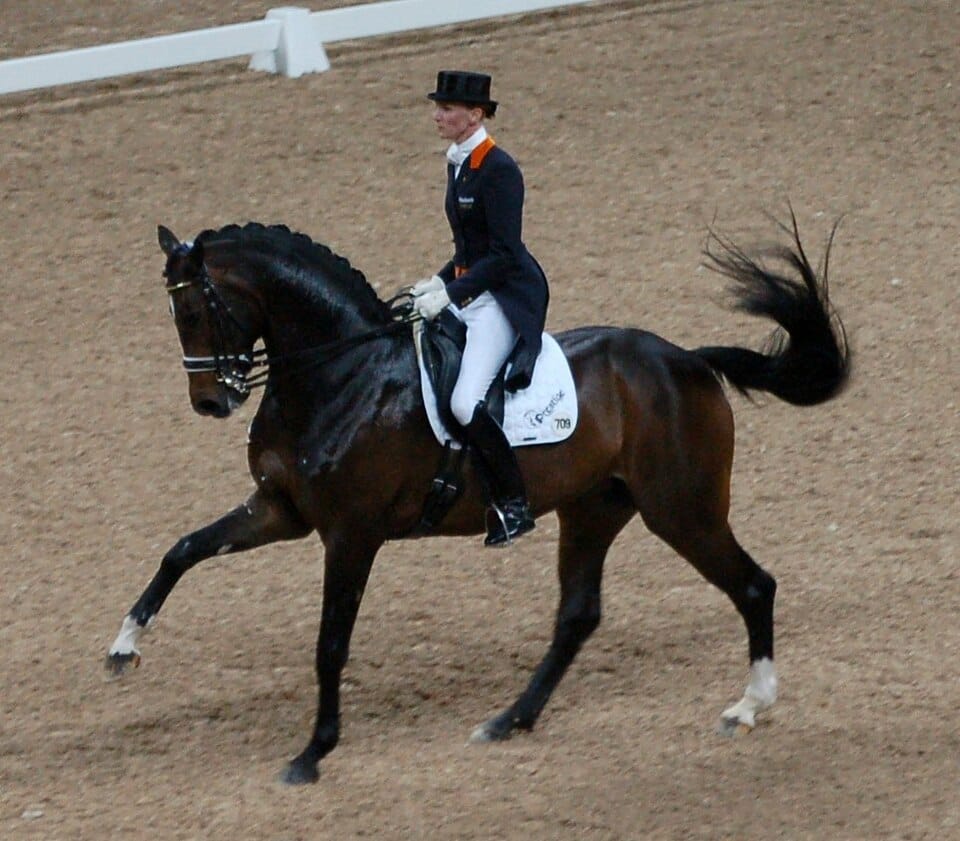
Hanoverian
Lower Saxony's warmblood, bred from the state stud at Celle founded in 1735: once a carriage and cavalry horse, now one of the world's leading sport horses.Height Big-framed and compact (the breeding aim sets no height range)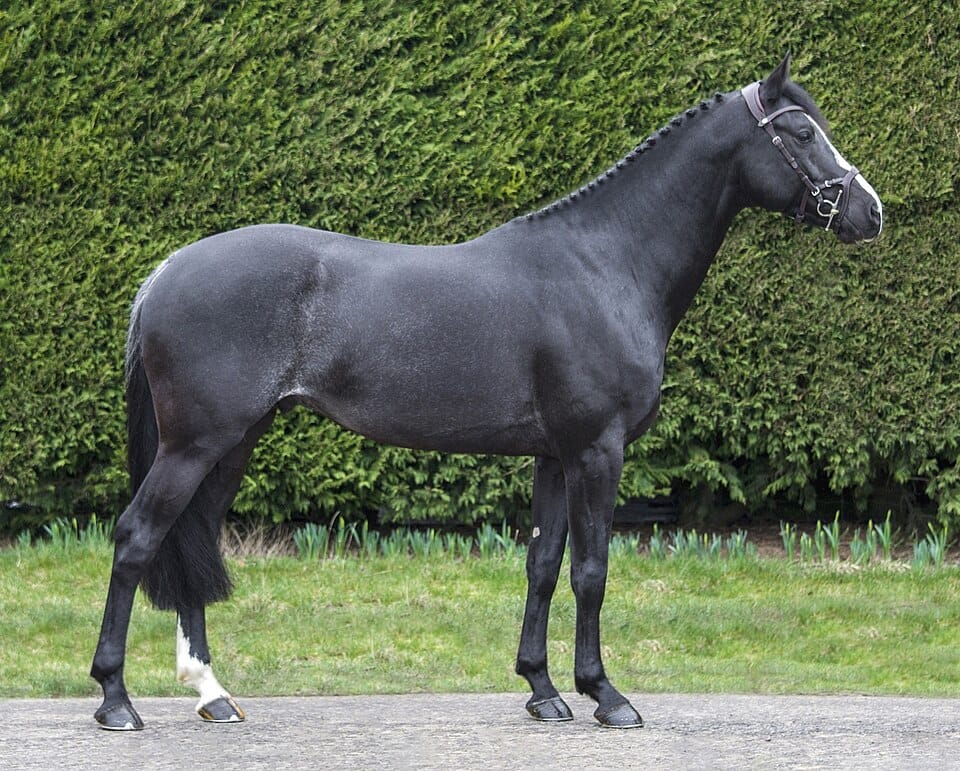
KWPN (Dutch Warmblood)
The Royal Dutch sport horse: farm horses of Groningen and Gelderland transformed after the war into one of the world's largest and most successful sport horse studbooks.Height No height range in the breeding goal, which is set by breeding direction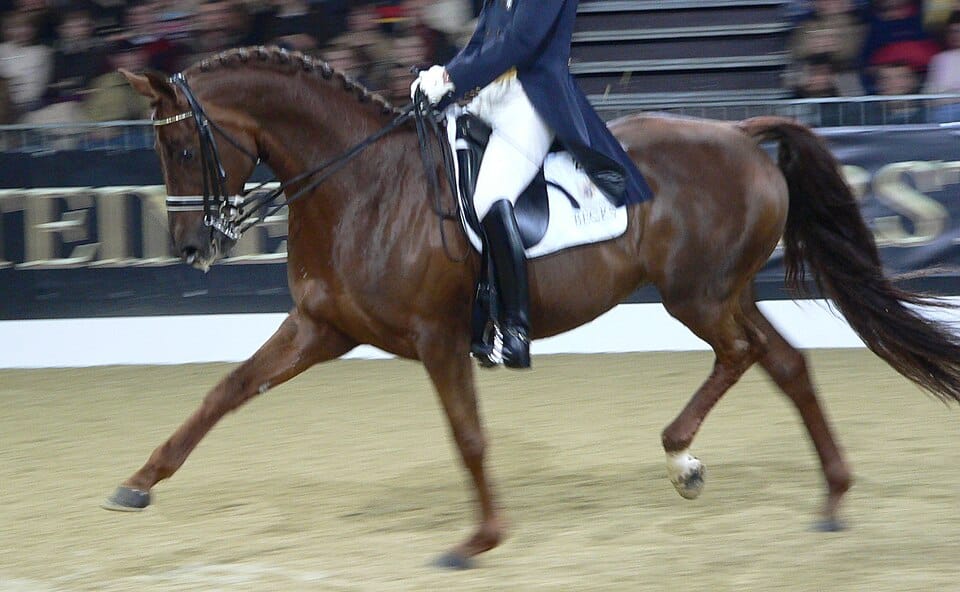
Warmbloods
Sport horses bred in graded studbooks, such as the Hanoverian, the Dutch KWPN and the British WBS-UK, for show jumping, dressage and eventing.Height Varies by studbook; WBS-UK grades mares from 15 hh (15.3 hh and over for its Select Stud Book)Middle East 1
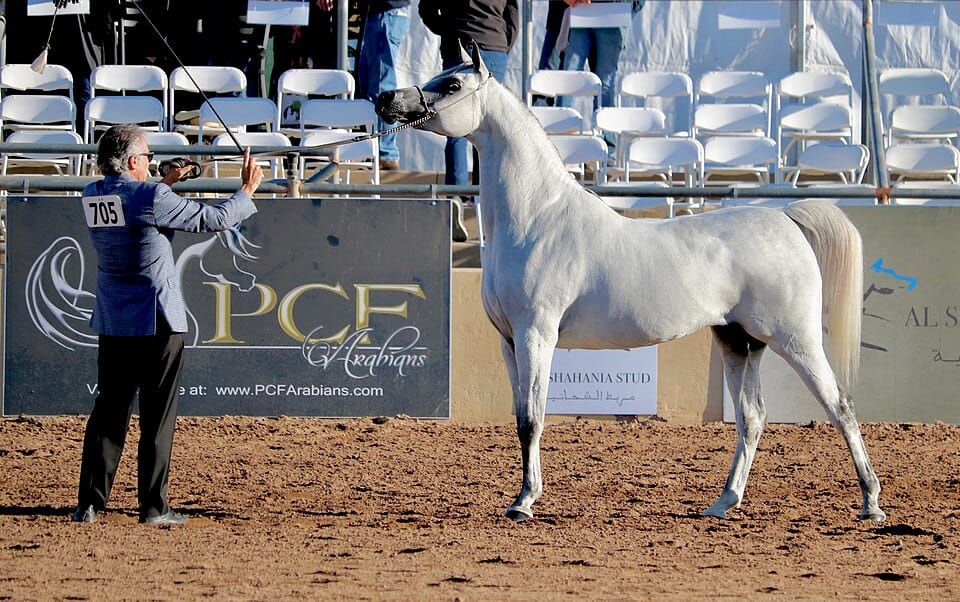
Photo credits
- Arab (Arabian). Photo: Montanabw, Wikimedia Commons, CC BY-SA 4.0
- Cleveland Bay. Photo: Paul Berens (owner’s archive), cropped by Crisco 1492, Wikimedia Commons, CC BY-SA 3.0
- Clydesdale. Photo: Daderot, Wikimedia Commons, CC0
- Connemara pony. Photo: Sophiesl, Wikimedia Commons, CC BY-SA 3.0
- Dales pony. Photo: Annapennell, Wikimedia Commons, CC BY-SA 4.0
- Dartmoor pony. Photo: Nilfanion, Wikimedia Commons, CC BY-SA 3.0
- Eriskay pony. Photo: Mipmapped, Wikimedia Commons, CC BY-SA 3.0
- Exmoor pony. Photo: Amanda Slater, Wikimedia Commons, CC BY-SA 2.0
- Fell pony. Photo: Heather Moreton, Wikimedia Commons, CC BY 2.0
- Hanoverian. Photo: nick, Wikimedia Commons, CC BY-SA 3.0
- Highland pony. Photo: Confuslefu, Wikimedia Commons, public domain
- Irish Draught. Photo: Wasechun tashunka, Wikimedia Commons, CC BY-SA 4.0
- Irish Sport Horse. Photo: Wasechun tashunka, Wikimedia Commons, CC BY-SA 4.0
- KWPN (Dutch Warmblood). Photo: Koningsh, Wikimedia Commons, CC BY-SA 4.0
- New Forest pony. Photo: Eponimm, Wikimedia Commons, CC BY-SA 3.0
- Shetland pony. Photo: Ronnie Robertson, Wikimedia Commons, CC BY-SA 2.0
- Suffolk (Suffolk Punch). Photo: Amanda Slater, Wikimedia Commons, CC BY-SA 2.0
- Thoroughbred. Photo: Doug Antczak, Baker Institute for Animal Health, Cornell University, Wikimedia Commons, public domain
- Warmbloods. Photo: BS Thurner Hof, Wikimedia Commons, CC BY-SA 3.0
- Welsh Cob (Section D). Photo: Pitke, Wikimedia Commons, CC BY-SA 3.0
- Welsh Mountain Pony (Section A). Photo: MBurger, Wikimedia Commons, CC BY-SA 3.0
- Welsh Pony (Section B). Photo: Hanna V, Wikimedia Commons, CC BY-SA 3.0
- Welsh Pony of Cob Type (Section C). Photo: MBurger, Wikimedia Commons, CC BY-SA 3.0